In the evolving world of printing, consistency is paramount. Designers and manufacturers have long struggled with maintaining uniformity in patterns. How does digital printing ensure consistent patterns? This question resonates deeply with anyone involved in textiles, packaging, or any printed media.
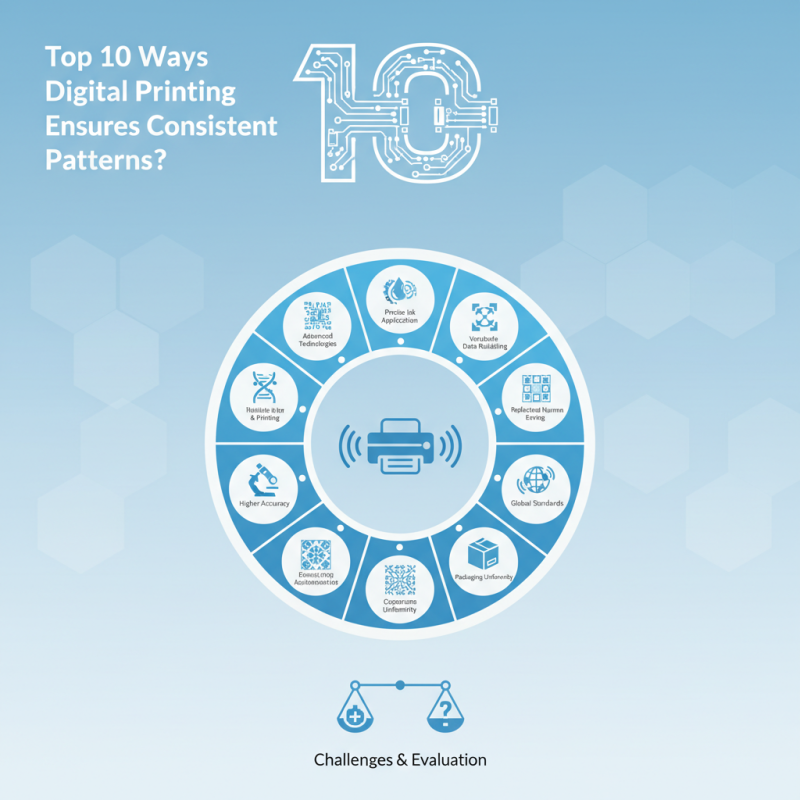
Digital printing utilizes advanced technologies that minimize errors. It achieves higher accuracy through precise control over ink application. Variable data printing also allows for personalized patterns without sacrificing uniformity. Each print run can replicate the same quality, enhancing reliability across projects. The digital workflow reduces human error, leading to fewer discrepancies.
However, the quest for perfection remains complex. Variations can still occur due to material differences or environmental factors. Companies must continually adapt to these challenges. While digital printing offers significant advantages, it requires ongoing evaluation to ensure consistent results. Thus, businesses must weigh digital printing’s strengths against its limitations.
Digital printing has revolutionized the way we create consistent patterns in various industries. Understanding the basics of digital printing technologies is essential. It utilizes digital files to produce high-quality images. This method allows for precise control over colors and designs, leading to uniformity across prints.
Research indicates that digital printing can achieve a color accuracy rate of 90% or higher. This consistency is crucial for brands that rely on identical patterns for their identity. Moreover, advancements in technology enable printers to handle complex designs without losing detail. The ability to replicate patterns seamlessly has made digital printing a preferred choice for textile manufacturing and packaging.
However, challenges remain. Variability in materials can affect print outcomes. Not all substrates interact the same way with ink, leading to discrepancies. Operators must constantly monitor and adjust settings to mitigate these effects. The need for skilled technicians is vital to ensure that the technology's potential is fully realized. With the right expertise, businesses can harness digital printing for their pattern needs effectively.
Color management plays a crucial role in achieving pattern consistency in digital printing. Accurate color representation is essential for maintaining uniformity across print runs. By employing ICC profiles, printers can ensure that colors remain consistent across different devices. This process involves measuring and calibrating colors to match industry standards. When executed correctly, it minimizes the risk of color discrepancies.
Inconsistent colors can lead to customer dissatisfaction. A minor variation can completely change the look of a pattern. Many printers struggle with achieving this level of accuracy consistently. Challenges include lighting conditions and substrate variations. Even small shifts in these factors can affect the final print quality. It’s essential for printers to regularly evaluate their color management processes.
Effective color management serves not just as a technical necessity but as a competitive advantage. Familiarity with advanced color calibration tools directly impacts a printer's reputation. However, achieving precise color matching requires ongoing training and knowledge. It can be easy to overlook this aspect amidst the rush of production deadlines. Continuous improvement is key.
Digital printing has revolutionized the way we reproduce design patterns. Software tools play a significant role in maintaining design accuracy. These tools allow designers to visualize patterns in a digital space before executing physical prints. They can preview how colors and textures appear across different materials, which enhances the final output's fidelity.
One essential tip is to select software that supports color management. This ensures that the colors you see on your screen will match the printed version. Adjustments can be made in real time, which minimizes the margin of error. Additionally, using vector graphics software is crucial for scalability. Vector files retain their quality regardless of size changes, so designs appear crisp and clear.
It’s essential to recognize that even with these tools, inconsistencies can still occur. Print settings may differ based on printer models or media types. Testing prints on various substrates can unveil imperfections in pattern alignment or color matching. Regular calibration of printers is another vital step that should not be overlooked. Paying attention to these details can significantly enhance the overall quality of your printed patterns.
Material selection plays a critical role in digital printing. The type of material can greatly influence the print's adherence and vibrancy. For instance, different substrates react differently to inks. Some materials absorb ink better, ensuring rich colors. Others may lead to smudging or fading. Understanding these characteristics is essential for achieving consistent patterns.
When choosing materials, consider the printing method. Not all materials are suitable for every type of digital press. Using a compatible substrate enhances print quality. Ensure the material you select can handle the desired ink type. This will help you avoid issues later on.
Tips for material selection: Seek materials with a smooth surface for better ink distribution. Test samples before deciding. Pay attention to the finish—glossy, matte, or textured surfaces all result in different effects. Reflect on your designs and how they interact with each chosen material. This can lead to improvements in your printing process. Keep experimenting and be open to adjusting your choices for optimal results.
Quality control in digital printing is crucial for achieving consistent patterns across various outputs. According to a report by Smithers Pira, 70% of print service providers face issues with color consistency. This inconsistency can stem from various factors, including equipment calibration and material variability. Regular calibration of printing devices is essential. It ensures that colors remain true to the intended design. Often, businesses neglect this step, leading to noticeable discrepancies in the final product.
Another key technique in maintaining uniformity is the use of standardized ink and substrate. Research indicates that 80% of print problems can be traced back to either inks or materials. Inconsistent substrates can absorb ink differently, causing patterns to vary across runs. Implementing rigorous testing for these components can significantly enhance quality outcomes. However, it's common to find that not all manufacturers adhere to these testing protocols, which can result in a flawed production process.
Training staff on quality control measures also plays a vital role. A skilled team can identify potential issues before they escalate, but not every organization prioritizes this training. The printing industry often overlooks the importance of ongoing education. Investing in professional development for staff could minimize errors and enhance overall print quality.
: Color management ensures consistent colors across print runs. Accurate representation maintains uniformity and minimizes discrepancies.
Using ICC profiles helps calibrate colors to match industry standards. Regular evaluation is crucial for achieving consistent results.
Variations in lighting and substrates can impact final print quality. Small shifts can lead to noticeable discrepancies.
The right substrate affects adherence and vibrancy. Different materials react differently to inks, impacting the final output.
Consider the printing method and compatibility with the ink type. Test samples to avoid issues later in the process.
Seek materials with a smooth surface. Pay attention to finishes like glossy or matte, as they create different effects.
Reflect on how designs interact with materials. Keep experimenting and adjusting choices for optimal results.
Continuous training ensures familiarity with advanced calibration tools. It helps maintain a printer’s reputation for quality.
Overlooking it can lead to dissatisfied customers. Even minor variations can significantly alter a pattern's appearance.
Regularly assess color management practices and strive for continuous improvement amidst production pressures.
Digital printing has transformed the way patterns are produced, ensuring consistency across a variety of applications. One key aspect of how does digital printing ensure consistent patterns is through the understanding of digital printing technologies, which utilize advanced processes to maintain accuracy. Effective color management plays a crucial role in achieving this consistency by controlling how colors are reproduced, minimizing discrepancies that can arise during printing.
Moreover, software tools are essential in accurately reproducing design patterns, allowing for precise adjustments and real-time monitoring of the printing process. Material selection is also vital, as using the right substrates can significantly impact the final output's reliability. Lastly, implementing quality control techniques ensures uniformity in prints, providing a systematic approach to identifying and correcting any inconsistencies. Together, these elements contribute to the effectiveness of digital printing in delivering consistently patterned outputs.

Magly Printer