Estimating how much does industrial digital printing cost in 2026 requires more than checking a machine’s purchase price. Industrial printers may range from several hundred thousand dollars to well above one million dollars. Installation, software, finishing equipment, operator training, maintenance, and facility upgrades can change the final investment considerably. Ink, substrates, electricity, and service contracts also influence the cost of every printed sheet.
Marco Boer, Vice President at I.T. Strategies, has often stressed, “Digital printing is a business decision, not simply a technology decision.” That observation remains important in 2026. A high-speed press may appear expensive, yet it can reduce setup waste, shorten delivery times, and support profitable short runs. A cheaper system may create hidden costs through slower production, frequent maintenance, or limited media compatibility.
The real answer depends on production volume, application, and required quality. Packaging, labels, commercial print, textiles, and industrial components each need different equipment. A buyer producing 500,000 personalized pages monthly faces a different calculation from a manufacturer printing durable labels every week. Even an accurate estimate can become imperfect when ink prices rise or demand changes. That uncertainty deserves attention.
This guide examines equipment prices, operating expenses, maintenance, labor, and return-on-investment factors. It also compares entry-level industrial systems with advanced production platforms. The goal is practical clarity, not a single attractive number. Before approving a purchase, companies should test their own files, substrates, run lengths, and finishing requirements. Real samples often reveal costs that spreadsheets miss.
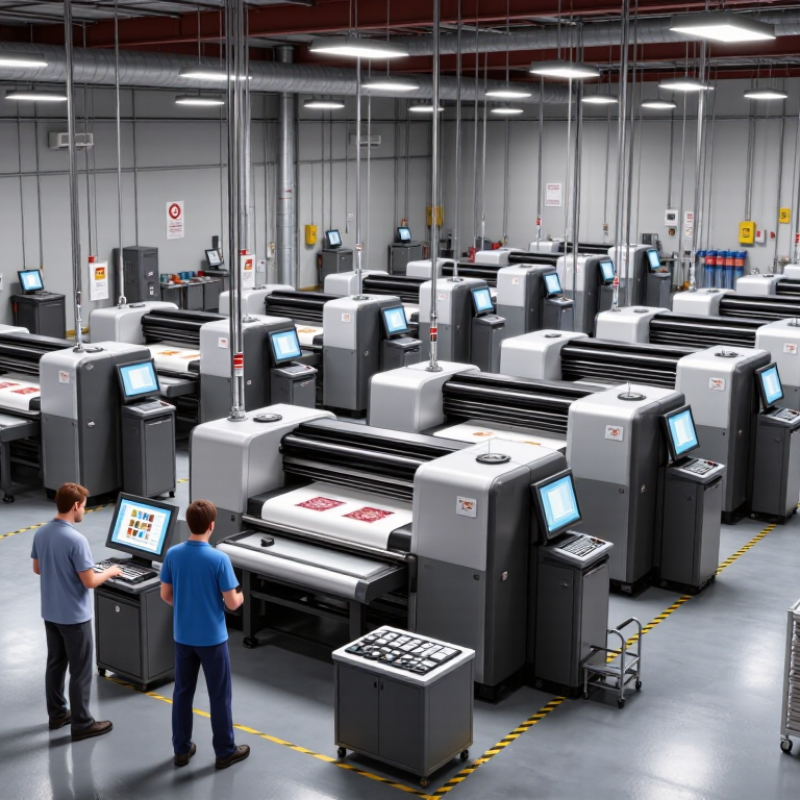
Industrial digital printing in 2026 includes more than the press itself. The cost usually covers ink, primers, substrates, software, calibration, drying, cutting, and finishing. It may also include operator training, maintenance contracts, workflow integration, and energy use. The boundary is not always clean. Some suppliers include finishing equipment, while others price it separately.
Smithers’ industry forecasts continue to show strong digital growth in packaging and commercial applications through the late 2020s. FESPA’s Print Census also reported that many printers expect personalized and short-run work to expand. These trends explain the investment. A digital line can reduce setup waste and support variable data, but high-speed equipment often needs expensive drying and automated inspection. Ink consumption changes sharply with coverage. A solid background costs more than a small label mark. Substrate testing can also become a hidden expense.
Tips: Request a cost-per-square-meter model. Include ink, labor, electricity, waste, service, and finishing. Compare the same substrate and coverage. Ask whether software licenses are annual. Check the warranty limits. A cheaper machine may create slower production. That is easy to miss. Keypoint Intelligence research frequently emphasizes workflow automation as a major productivity factor, yet automation still requires clean files and trained staff. One practical mistake remains common: measuring only press speed. Real output depends on changeovers, drying time, reprints, and finishing queues. The spreadsheet may look precise, but production is rarely perfect.
| Industrial Printing Area | Typical 2026 Equipment Cost (USD) | Installation and Commissioning | Typical Operating Cost | Common Print Materials | Indicative Production Capacity | What the Cost Typically Includes |
|---|---|---|---|---|---|---|
| Production Inkjet for Commercial and Publishing Work | $250,000–$1,500,000 | $25,000–$150,000 | $0.03–$0.18 per A4-equivalent sheet, excluding paper and labor | Uncoated and coated paper, lightweight book stock, direct-mail stock | Up to approximately 100–300 m/min, depending on configuration | High-volume variable-data printing, books, transactional documents, direct mail, inline quality control, workflow software, and color management |
| Industrial Toner Presses | $150,000–$800,000 | $15,000–$80,000 | $0.04–$0.25 per A4-equivalent sheet, excluding substrate and labor | Coated paper, synthetic sheets, labels, lightweight packaging papers | Approximately 60–150 m/min or 2,000–6,000 A4-equivalent sheets per hour | Short-run commercial work, personalization, proofing, on-demand books, color management, RIP software, and automated registration |
| Wide-Format Roll-to-Roll Printing | $30,000–$250,000 | $3,000–$30,000 | $0.30–$3.00 per m² for ink, maintenance allocation, and energy, excluding media and finishing | Self-adhesive vinyl, banners, textiles, films, wall coverings, and coated papers | Approximately 20–150 m² per hour, depending on resolution and ink mode | Signage, décor, graphics, displays, roll handling, print-and-cut workflows, color profiling, and drying or curing systems |
| Flatbed UV Printing | $80,000–$500,000 | $8,000–$60,000 | $1.00–$8.00 per m² for ink, energy, and routine maintenance, excluding boards and labor | Rigid plastic, foam board, corrugated board, glass, metal, wood, acrylic, and composite panels | Approximately 40–150 m² per hour, depending on coverage, resolution, and number of passes | Direct-to-board printing, white and clear inks, spot effects, varnish options, registration systems, bed size, and UV curing |
| Industrial Corrugated Packaging Printing | $500,000–$3,000,000 | $50,000–$300,000 | $0.08–$0.45 per m² for ink, energy, and routine maintenance, excluding board and finishing | Corrugated sheets, kraft liner, white-top liner, and preprinted packaging board | Approximately 2,000–15,000 m² per hour, depending on press architecture and print quality | Short- and medium-run cartons, variable graphics, water-based or UV ink systems, sheet feeding, drying, inspection, and production workflow integration |
| Digital Label Printing | $200,000–$1,500,000 | $20,000–$150,000 | $0.04–$0.30 per linear meter for ink or toner and press-related consumables, excluding label stock and finishing | Paper labels, pressure-sensitive films, shrink-sleeve films, unsupported films, and specialty stocks | Approximately 20–80 m/min, depending on substrate, ink technology, and finishing requirements | Variable labels, versioned packaging, white ink, spot colors, inline inspection, digital embellishment options, and converting or finishing integration |
| Textile and Industrial Fabric Printing | $100,000–$1,200,000 | $10,000–$120,000 | $0.40–$4.00 per m² for ink, energy, and routine maintenance, excluding fabric and post-treatment | Polyester fabric, cotton, blended textiles, flags, décor fabric, and coated technical textiles | Approximately 50–1,000 m² per hour, depending on direct-to-fabric or transfer workflow | Fashion, home décor, soft signage, flags, transfer paper, pretreatment, fixation, drying, washing, and fabric handling |
| Industrial Ceramic and Tile Printing | $500,000–$2,500,000 | $50,000–$250,000 | $0.10–$0.80 per m² for digital ink, maintenance, and energy, excluding tiles and glazing materials | Ceramic tiles, porcelain slabs, architectural surfaces, and specialty coated panels | Approximately 30–120 m/min in integrated production lines | Decorative surface printing, digital glazing, specialty effects, line integration, curing or firing compatibility, inspection, and production data management |
| Print-and-Cut, Routing, and Digital Finishing | $20,000–$350,000 | $2,000–$35,000 | $0.10–$2.50 per m² or sheet, depending on cutting, creasing, routing, folding, and labor requirements | Printed films, paperboard, corrugated board, foam board, acrylic, textiles, and composite sheets | Approximately 10–200 m² per hour, depending on tooling and job complexity | Contour cutting, creasing, routing, kiss-cutting, folding, lamination, trimming, waste removal, and barcode-based job automation |
| Prepress, Workflow, and Color Management | $5,000–$150,000 | $1,000–$20,000 | $500–$8,000 per month for software, support, color calibration, and workflow administration | Digital artwork, PDF files, variable-data records, color profiles, and production templates | Depends on the number of connected presses and daily job volume | RIP processing, imposition, nesting, color profiling, variable-data automation, job tracking, approval workflows, and production reporting |
| Facility, Utilities, and Environmental Requirements | $25,000–$500,000 for preparation and upgrades | Project-dependent | $0.01–$0.20 per printed m² or sheet equivalent for electricity, climate control, compressed air, ventilation, and waste handling | Press-room consumables, filtration supplies, cleaning materials, pallets, and packaging supplies | Depends on press load, operating hours, and building capacity | Electrical upgrades, HVAC, humidity control, ventilation, flooring, network infrastructure, fire protection, waste handling, and operator safety provisions |
| Maintenance, Service, and Labor | Usually budgeted at 5%–12% of equipment purchase price annually | May be included in a service contract or charged separately | $0.02–$0.30 per production unit, depending on technology, duty cycle, and service coverage | Printheads, filters, wipers, cleaning fluids, fuser components, rollers, lamps, belts, and inspection parts | Depends on uptime targets, staffing, and preventive maintenance schedules | Operator wages, technical support, spare parts, preventive maintenance, calibration, troubleshooting, training, and planned downtime |
| Typical Total Investment for a New Industrial Digital Print Line | $300,000–$5,000,000+ | Approximately 10%–25% of equipment price for installation and integration | Project-specific; substrate, ink, labor, energy, maintenance, and finishing are the main variable costs | Determined by the selected application and required production specification | Determined by press width, speed, automation, shift pattern, and finishing configuration | Press hardware, software, installation, training, facility preparation, finishing, quality control, maintenance, and initial operating setup |
| Cost basis: All figures are indicative 2026 planning ranges in U.S. dollars for new industrial systems. Actual prices vary by print width, resolution, automation, ink technology, regional labor rates, installation complexity, financing, taxes, substrate, production volume, and service agreement. Consumable operating costs generally exclude substrate, labor, shipping, taxes, and post-print finishing unless specifically stated. | ||||||
A mid-range production press may cost $150,000 to $600,000. High-throughput systems can exceed $1 million. Installation, ventilation, software, and training may add 10% to 25%. The equipment price is only part of the budget.
Ink, coating, primer, paper, film, board, and specialty substrates drive recurring costs. Material costs may range from $0.05 to $2.00 per printed square meter. Waste can consume 5% to 15% of materials. Unfamiliar media often creates more rejected sheets.
Higher volume spreads setup, maintenance, training, and software costs across more products. A plant producing 50,000 labels may pay less per piece than a shop producing 500. Small runs reduce storage and obsolete inventory. That benefit can be overlooked.
One line commonly needs two trained operators per shift. They may handle finishing, inspections, adjustments, and reprints. Annual labor expenses may range from $80,000 to $220,000. Location and shift coverage change the final figure.
Maintenance contracts commonly cost 3% to 8% of equipment value annually. Also budget for printheads, filters, belts, calibration tools, and service travel. Track small parts carefully. They are easy to ignore.
Include electricity, compressed air, cleaning fluids, finishing, packaging, and downtime. A 10,000-package order may need four printing hours. Trimming, inspection, and reprints follow afterward. The quoted print rate rarely covers every step.
Separate fixed costs from variable costs. Fixed costs include equipment, installation, software, training, and facility upgrades. Variable costs include ink, media, energy, labor, finishing, waste, and packaging. Use this model: monthly budget equals fixed costs plus variable cost per unit multiplied by output.
Add 8% to 15% for reprints, spoilage, and unexpected service work. Seasonal spikes and rush orders may disrupt an efficient workflow. Energy prices and service rates can also change quickly. No forecast is perfectly reliable.
Request quotations using identical assumptions. Specify sheet or roll size, ink coverage, colors, waste limits, and annual operating hours. Compare cost per finished unit, not cost per printed sheet. That difference matters.
Track ink use, rejected sheets, downtime, and maintenance for at least three months. Review five pilot jobs before approving a purchase. Then adjust the budget quarterly. The spreadsheet may look precise while hiding weak assumptions.
Understanding how much does industrial digital printing cost in 2026 requires more than looking at the price of a printer. Industrial digital printing may include high-speed production systems, specialized inks or toners, automated finishing, workflow software, substrates, installation, and operator support. Total expenses are shaped by print volume, image quality, media type, color requirements, machine capacity, energy use, labor rates, maintenance schedules, and the level of automation needed.
A practical budget should separate initial investment from ongoing operating costs. Equipment and setup often represent the largest upfront expense, while materials, labor, maintenance, software, and facility requirements determine long-term spending. Higher production volumes can reduce the cost per printed unit, but advanced technologies may require greater investment and technical expertise. To estimate a realistic budget, define annual output, product specifications, expected utilization, material consumption, staffing needs, maintenance allowances, and potential growth. Comparing these costs over several years provides a clearer view of total ownership and helps identify the most efficient production approach.

 Magly Printer