Glass digital printing is used across several industries in China, but its role changes with the product. In architecture, printed glass appears in office partitions, façade panels, and decorative interior features. Furniture makers use it for cabinet doors and tabletops, where patterns must align with edges and hardware. Appliance producers may print control panels, refrigerator surfaces, or other glass components. The details matter. A design that looks crisp on a sample can behave differently on a large production run.
So, what industries use glass digital printing technology, and what do they need from it? This outline explores applications in construction, automotive supply, furniture, home appliances, electronics, and retail display. Each sector weighs different factors, including image detail, color consistency, durability, order volume, and glass shape. Some jobs require opaque colors or precise registration. Others prioritize small-batch customization. The printing system and ink also matter; not every process is suitable for glass that will be tempered or exposed to heat. Buyers should confirm process compatibility with the printer and glass processor before specifying a design. It is easy to focus on the artwork and overlook testing. That can be costly. China’s suppliers serve varied markets, yet capabilities differ from factory to factory. The sections ahead compare common uses and practical considerations, without treating every printed-glass application as interchangeable.
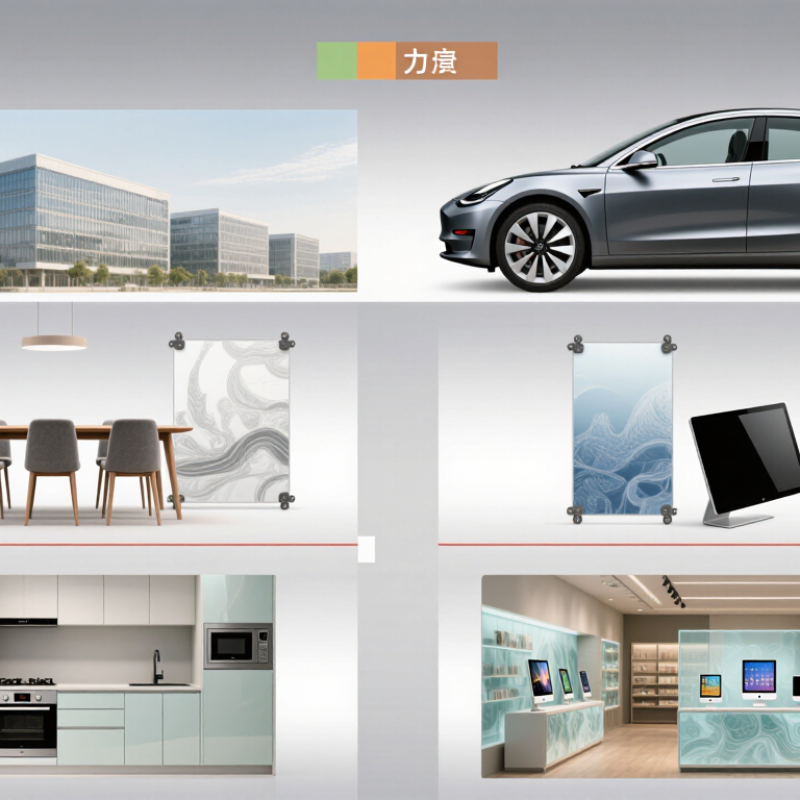
Glass Digital Printing Across China’s Key Industries
Architecture is one of China’s clearest markets for digitally printed glass. The National Bureau of Statistics reported construction output of RMB 31.6 trillion in 2023, a measure of the sector’s scale, not glass-printing demand itself. Printed glass appears on façades, office partitions, shower screens, and decorative doors. A fine ceramic pattern can soften daylight while preserving a view. Small batches matter. Yet color consistency across large panels still takes careful calibration.
Automotive manufacturing creates another opportunity. The China Association of Automobile Manufacturers recorded 30.16 million vehicles produced in 2023. Digital printing can add opaque borders, decorative details, or custom patterns to selected glass surfaces. The exact process depends on the part: heat resistance, visibility, and durability all need testing. A striking sample is not enough.
Appliance makers and commercial display suppliers also use printed glass for oven doors, refrigerator panels, counters, and signage. Smooth black glass with a subtle control graphic can make a kitchen feel less cluttered. Retail projects often need varied designs in modest quantities, where digital workflows can be useful. Still, print speed is not the whole story. Ink adhesion, cleaning chemicals, and panel size can change the economics, and buyers should test finished parts under real operating conditions.
In China’s architecture and construction sector, glass digital printing helps turn ordinary panes into functional design surfaces. Printed glass appears on façades, lobby partitions, shower screens, and interior doors. On a façade, patterns can soften direct sunlight while preserving daylight. At close range, a fine gradient may look elegant; from across a courtyard, it can appear nearly solid. Check both views before approving a design.
For partitions, printed bands or subtle motifs can add privacy without making an office feel closed in. Interior glass also offers room for wayfinding graphics or repeated patterns. The finish and printing process should suit the glass type and its intended use. A sample viewed under real lighting is more useful than a screen image. I would not assume every attractive pattern will remain clear after fabrication; some details need adjustment.
Tips: Request a full-size sample, and inspect it in daylight and at night. Confirm that the print is compatible with the specified glass processing. Small test panels help catch color shifts and alignment issues.
Architecture and construction use digitally printed glass for façades, partitions, and interior surfaces. Counts show the number of examples in this chart’s curated list—not market share or industry volume: façades (spandrel panels, rainscreens, solar-shading glass); partitions (office dividers, meeting-room privacy screens, glazed walls); interior glass (doors, wall cladding, shower enclosures, signage).
Across China’s automotive and transportation supply chains, digital printing makes vehicle glass more than a transparent barrier. Ceramic inks can create black borders, shaded gradients, and precise patterns on windshields, side windows, rear glass, and sunroofs. These designs may conceal adhesive areas or help manage sunlight while keeping the glass’s overall appearance consistent. Digital production also supports design changes without requiring a new physical screen for every pattern. Details matter.
Many vehicle applications use ceramic frit that is fired during glass processing, bonding the print to the surface. Still, print placement can affect visibility, camera areas, heating elements, and adhesive bonding. Each design needs review alongside the glass shape and processing conditions. Digital printing is not automatically better. Color matching, edge sharpness, and durability can vary with ink, equipment, and firing settings. A useful evaluation includes samples tested through relevant heat, weather, and abrasion cycles.
Tips: Check print alignment on curved samples, not just flat proofs. Ask for process-specific durability data. One detail is easy to overlook: a dark border may look uniform on screen but shift slightly after firing. Don’t assume.
| Vehicle Application | Typical Glass Location | Common Printed Details | Typical Printing Approach | Purpose | Key Design and Production Considerations |
|---|---|---|---|---|---|
| Passenger cars | Windshields, rear windows, and side windows | Opaque borders, shaded bands, sensor windows, and small markings | Digital ceramic frit printing, commonly followed by glass strengthening or lamination as required by the part design | Conceals bonding areas, helps define shaded regions, and supports the integration of sensors and other vehicle components | Printed areas must be positioned to preserve required visibility, fit the glazing design, and withstand the specified processing and service conditions. |
| Electric vehicles | Roof glazing, rear glazing, and fixed side windows | Decorative patterns, perimeter masks, and patterned shading | Digital ceramic printing for designs that require a durable, heat-resistant finish | Combines styling with shading and masking functions | Pattern density and coverage should be checked for appearance, light transmission, heat-management requirements, and compatibility with the glazing construction. |
| Buses and coaches | Large side windows, front glazing, and rear windows | Privacy bands, border masks, and decorative graphics | Digital printing can accommodate varied panel shapes and artwork; the ink and post-processing are selected for the glass application | Provides passenger privacy, visual consistency, and masking around fittings | Large panels require careful control of print alignment, color consistency, viewing areas, and applicable vehicle-glazing requirements. |
| Rail vehicles | Passenger windows, partition glazing, and door glass | Privacy patterns, safety markings, and decorative motifs | Digital printing on glass, with the printing system and finish selected to suit the specified glazing and operating environment | Supports wayfinding, privacy, interior design, and visibility of glass panels | Graphics should remain legible and should not obstruct required sightlines, emergency information, or safety-related markings. |
| Commercial vehicles and trucks | Cab windshields, rear windows, and door glass | Opaque ceramic borders, shaded zones, and component-masking details | Digital ceramic frit printing is used where a fired, durable printed layer is specified | Helps mask adhesives or hardware and provides controlled shading or styling | Print placement must account for wipers, cameras, mirrors, glazing curvature, and the driver’s required field of view. |
| Special-purpose vehicles | Cab glazing, equipment windows, and protective enclosures | Identification graphics, warning symbols, privacy areas, and custom patterns | Printing method depends on the glass type, required durability, and whether the glass will be tempered or laminated | Combines functional markings with application-specific design | Confirm ink compatibility, adhesion, optical requirements, cleaning resistance, and the applicable vehicle or equipment specifications. |
In China’s electronics supply chain, digitally printed glass serves as a visible, functional surface. It appears on display covers, touch-control panels, and appliance doors, where graphics must align with sensor zones, buttons, and edges. Ceramic inks can create crisp icons, dark borders, or translucent patterns directly on glass. The result feels smooth under a fingertip and resists routine wiping. Not every panel needs printing.
IDC’s Worldwide Quarterly Mobile Phone Tracker reported 1.17 billion smartphone shipments worldwide in 2023. This figure is not a measure of glass demand, but it shows the scale of devices that depend on durable display surfaces.
For manufacturers, digital printing also supports short production runs and varied panel designs without preparing a separate screen for every artwork. Still, color matching across batches can be difficult; a small shift may stand out beside a bright screen.
Tips: Confirm the glass thickness, ink system, and heat-treatment process before approving artwork. Test fine text and touch areas on a finished sample, not just a flat proof. Keep a reference panel. It catches drift early. Appliance panels also need testing under kitchen light, where glare can make pale graphics hard to read.
In Chinese furniture workshops and interior fit-out projects, digitally printed glass is used for cabinet doors, wardrobe panels, room dividers, and backsplashes. Ceramic inks are printed onto glass and cured, creating patterns that withstand routine wiping and keep repeated panels visually consistent. A translucent geometric motif can soften a partition while preserving daylight. Opaque prints on cabinet fronts can conceal stored items without adding a separate film. Edges and drilling positions need careful planning; printing cannot correct a poor fit.
Retail designers use printed glass on wall cladding, counters, shelving backs, and fitting-room partitions. A pale stone pattern may brighten a narrow aisle, while a display case can carry fine graphics behind products. Advertising applications include shopfront panels, promotional graphics, and illuminated displays. White ink beneath colored areas can help images remain legible against darker interiors. Color may shift with glass tint and lighting, so a physical sample viewed in the actual space is more dependable than a screen preview. It takes extra time. Scratches, edge chips, and installation pressure still matter, especially on large panels. Some designs look richer on screen than in a busy shop. Slightly reflective glass can also compete with printed details, an easy issue to overlook.
It appears on façades, lobby partitions, shower screens, and interior doors. Patterns can soften sunlight while keeping rooms bright.
Yes. Printed bands or subtle motifs can screen views while allowing daylight through. Check the pattern from both sides.
Glass tint and lighting can change colors. A sample in the actual room gives a more reliable view than a screen.
View it up close and across the courtyard. Fine gradients may look nearly solid from far away.
It can cover cabinet doors, wardrobe panels, room dividers, and backsplashes. Opaque prints can hide stored items.
Yes. Confirm compatibility with the specified glass processing, and plan edges and drill holes carefully. Printing cannot fix a poor fit.
White ink beneath colored areas can help images stand out. Reflective glass may still compete with fine details.
Look for color shifts, alignment issues, scratches, and edge chips. I may be too cautious, but installation pressure matters.
Glass digital printing serves a wide range of industries across China, bringing color, patterns, and functional designs directly onto glass surfaces. In architecture and construction, it is used for building façades, office partitions, doors, and interior features, helping balance visual appeal with privacy and light control. In automotive and transportation, printed glass can support vehicle design and provide clear, durable graphics for different applications.
For readers asking what industries use glass digital printing technology, electronics and appliances are another important area, where printed glass appears on screens, control panels, and product surfaces. Furniture makers, retailers, and advertisers also use it for tabletops, decorative panels, display cases, and visual signage. Across these fields, digital printing allows designs to be tailored to different shapes and project needs, making glass a versatile material for both practical and decorative purposes.

Magly Printer