In the fast-evolving world of industrial inkjet technology, understanding what features are important in industrial inkjet technology is crucial. Experts like Dr. Emily Carter, a leading figure in inkjet research, emphasize, "Efficiency and precision are key drivers in the success of industrial printing applications." With various designs and applications on the market, choosing the right printer can be daunting.
Industrial inkjet technology relies on several standout features to enhance productivity and meet industry demands. Reliability, speed, and print quality are fundamental attributes. Additionally, adaptability to various substrates can significantly influence operational efficiency. As the market grows, the balance between cost-effectiveness and performance becomes more complex. Companies must carefully evaluate these features to ensure they stay competitive.
Despite advancements, challenges remain. Many businesses overlook the importance of technology integration and support services. This can lead to inefficiencies and unexpected costs. A deeper understanding of what features are important in industrial inkjet technology allows companies to make informed decisions and avoid pitfalls. The right choices can foster innovation, creating opportunities that were previously unattainable.
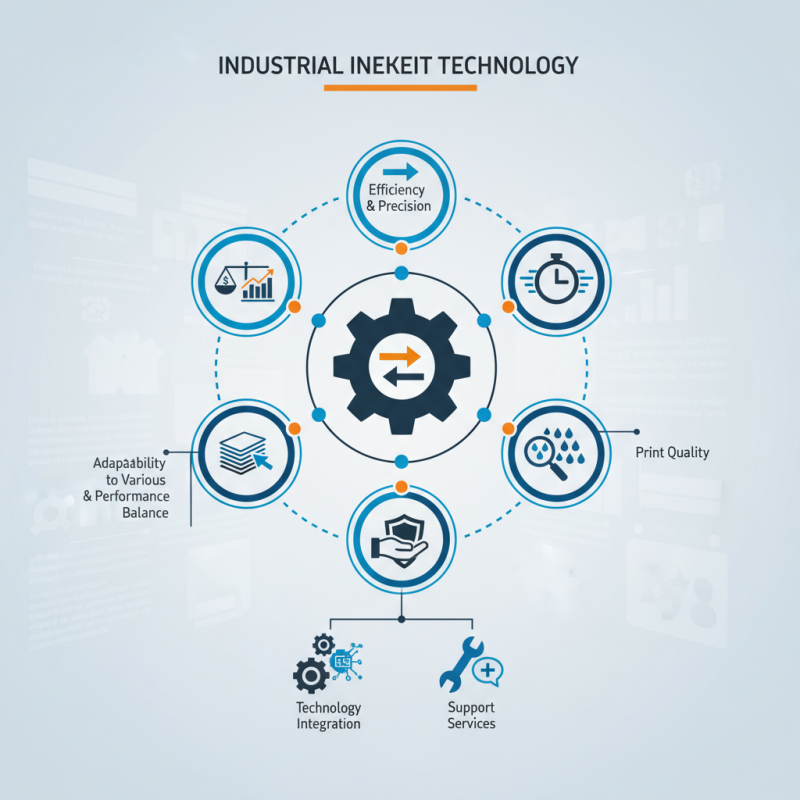
When discussing industrial inkjet technology, several key characteristics play a crucial role in its performance. One of the most important factors is resolution. High-resolution printing ensures that the output is detailed and clear. Reports indicate that the market for high-resolution inkjet printers is expected to grow by over 10% annually through 2026.
Print speed is another significant aspect. The demand for faster production times leads manufacturers to prioritize speed. According to industry trends, companies are aiming for speeds exceeding 200 feet per minute. This increase can dramatically enhance throughput. Nevertheless, achieving this speed without compromising quality requires careful calibration and expertise.
**Tips:**
To optimize inkjet performance, regular maintenance is essential. Clogged nozzles can slow down production and degrade quality. Also, using the right ink type can significantly affect longevity and adherence.
Durability of the prints matters too. Many end-users seek prints that withstand various environmental conditions. Different substrates may influence ink adhesion and longevity. Research shows that roughly 35% of print failures stem from poor substrate compatibility. Therefore, testing is vital before final production.
**Tips:**
Conduct thorough compatibility tests. Understand the interactions between ink and material to reduce failures. Be prepared for adjustments during the initial runs.
| Feature | Description | Impact on Performance |
|---|---|---|
| Print Head Technology | Utilizes advanced print head designs for precise droplet placement. | Enhances print quality and reduces waste. |
| Ink Formulation | Custom-engineered inks for different substrates and applications. | Improves adhesion, durability, and color vibrancy. |
| Drop Volume Control | Adjustable droplet sizes for various printing needs. | Enables high-resolution prints and versatility. |
| Speed and Throughput | Fast printing speeds and efficient production workflows. | Increases overall productivity and reduces lead times. |
| Print Resolution | Ability to achieve high DPI (dots per inch) resolution. | Delivers fine detail and superior image quality. |
| Substrate Compatibility | Capability to print on a wide range of materials. | Expands application possibilities across industries. |
| Maintenance and Reliability | Ease of maintenance and robustness of the system. | Minimizes downtime and ensures consistent performance. |
| Environmental Considerations | Eco-friendly inks and sustainable printing processes. | Supports corporate sustainability goals and regulations. |
| Integration with Automation | Compatibility with automated production lines. | Enhances efficiency and reduces human error. |
| Cost of Ownership | Total cost implications including inks, maintenance, and operation. | Affects overall budget and return on investment. |
: Modern inkjet technology offers high print quality. Resolutions exceed 1200 dpi, producing sharp images and vibrant colors.
Humidity and temperature impact ink absorption and output. A stable environment is crucial for maintaining optimal print quality.
Color matching can be inconsistent across surfaces. This unpredictability may require reprints or adjustments, affecting production.
Inkjet technology can print on various substrates, including textiles and metals. This versatility enhances production efficiency across industries.
Regular maintenance is vital for performance. Neglect can lead to downtimes and significant repair costs over time.
Maintenance and consumable costs can significantly impact overall expenses. A low initial price could lead to regrets later on.
Users should evaluate substrate needs and experiment with settings. Trial and error can optimize outputs and enhance quality.
Continuous training is essential for operators. A steep learning curve can affect productivity, making investment in training important.
Adopting efficient ink technologies can decrease ink usage by up to 40%. This helps lower operational costs and minimize waste.
Yes, advanced inkjet systems allow seamless transitions between different materials. This feature minimizes downtime in production lines.
When considering what features are important in industrial inkjet technology, several key characteristics play a crucial role in performance. Print quality and resolution are paramount, as they ultimately determine the visual impact and clarity of output. Users can expect high-resolution capabilities that facilitate detailed graphics and text. Additionally, speed and efficiency in production are essential, as they directly influence throughput and overall productivity.
Furthermore, versatility in substrates is a significant factor, allowing inkjet technology to adapt to a wide range of materials, from paper to plastics and textiles. Cost-effectiveness and maintenance also weigh heavily in long-term considerations for users, as managing operational costs and ensuring ease of upkeep are vital for sustained performance. Together, these features create a robust framework for evaluating industrial inkjet systems, catering to diverse application needs while ensuring high-quality output and operational efficiency.

 Magly Printer