Explore engineered precision machinery designed for ceramic tiles, architectural glass, UV flatbed applications, wall murals, and high-volume packaging production.

The global industrial digital printing sector is experiencing an unprecedented structural evolution. Driven by rapid shifts toward localized batch customization, shortened product lifecycles, and increasingly stringent global environmental mandates, industrial manufacturers are aggressively transitioning from traditional screen, offset, and flexographic printing systems to high-speed digital inkjet solutions. According to recent industrial automation research, the global market for high-speed industrial digital printing machinery is projected to expand at a compound annual growth rate (CAGR) exceeding 8.4%, reaching a multi-billion dollar evaluation before 2030.
At the epicenter of this technological inflection point sits China's manufacturing ecosystem. China has shifted from low-cost assembly to becoming a global R&D pioneer and dominant exporter of ultra-high-speed, multi-pass, and single-pass digital printing systems. Chinese manufacturers have closed the historic performance gap by integrating premium industrial printhead architectures (such as Kyocera, Ricoh, Epson, and Konica Minolta) with internally engineered, high-precision motion control beds, custom RIP (Raster Image Processor) software pipelines, and specialized UV-LED curing assemblies.
Eliminates physical plate-making costs, reducing setup times from hours to seconds. Enables short-run printing runs of 1 to 10,000 units with complete profitability and zero waste generation.
From non-porous architectural tempered glass and dense ceramic glazes to flexible peptide-based white paper, wood-grain panels, and metals—digital inkjet handles diverse media with uniform adhesion.
Replacing water-intensive rotary screen processes with precision Drop-on-Demand (DoD) piezoelectric jetting cuts chemical discharge, saves water, and reduces energy consumption by up to 65%.
Achieving reliable, continuous operation at speeds up to 100+ linear meters per minute requires engineering synthesis across electromechanical systems, fluid dynamics, chemistry, and real-time computation. Leading Chinese digital printer manufacturers build systems on four foundational technical pillars:
Modern high-speed printers utilize Piezoelectric Drop-on-Demand (DoD) printhead arrays operating at firing frequencies up to 50 kHz. Chinese OEM engineers create custom multi-pulse voltage waveforms tailored specifically to ink viscosity and surface tension curves. This micro-level drop control guarantees sub-picoliter jetting accuracy (2 pL to 28 pL multi-drop grayscale), minimizing satellite droplets and maintaining sharp vector edge sharpness even during ultra-fast linear carriage passes.
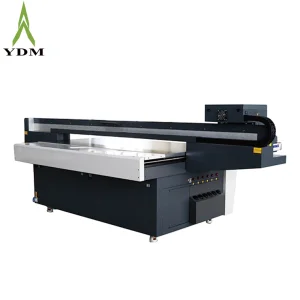
Mechanical vibration is the primary enemy of digital print quality at high speeds. Advanced Chinese factories employ heavy-duty, machine-milled steel gantry structures integrated with dual magnetic linear motors and high-precision Renishaw linear optical encoders. This architecture achieves sub-micron positional repeatability (±0.005mm), preventing horizontal banding and color register misalignments across large-format print spans up to 2.5 x 1.3 meters or continuous roll feeds.
To prevent nozzle clogging during continuous 24/7 industrial production cycles, top-tier printers feature continuous negative-pressure ink recirculation right through the printhead manifold. Coupled with automated internal ink heating chambers, this system ensures constant fluid viscosity regardless of fluctuating ambient plant temperatures. Inks containing inorganic ceramic pigments or metallic particle suspensions remain fully suspended without sedimentation.
| Performance Metric | Entry-Level Desktop Flatbed | Industrial Multi-Pass UV Flatbed | High-Speed Single-Pass Industrial Line |
|---|---|---|---|
| Typical Throughput | 5 - 15 sq.m / hr | 40 - 120 sq.m / hr | 150 - 600+ sq.m / hr |
| Printhead Technology | Epson i1600 / DX5 Series | Ricoh GEN5/GEN6, Konica 1024i | Kyocera KJ4B / Dimatix StarFire |
| Ink Compatibility | Standard UV-LED, Solvent | High-Viscosity UV, Digital Varnish, White | Aqueous Pigment, Ceramic Solvent Inks |
| Substrate Thickness | 0.1mm - 100mm | 0.1mm - 150mm (Vacuum Table) | 0.5mm - 50mm (Continuous Feed) |
| Duty Cycle Rating | 8 Hours / Day (Light Commercial) | 16-24 Hours / Day (Industrial Batch) | 24/7 Continuous Automated Line |
Foshan Magly Printer Co., Ltd. is a professional Industrial Digital Printing Machine Manufacturer dedicated to delivering advanced ceramic and glass inkjet printing solutions as well as integrated surface decoration systems for modern manufacturing industries. Based in Foshan, a key hub for ceramics and industrial equipment in China, the company benefits from a strong supply chain and extensive industry expertise.
Magly operates a modern production facility covering over 7,000 square meters, supported by a skilled team of more than 100 employees, including experienced engineers, R&D specialists, and technical service professionals. The company focuses on developing high-precision digital printing machines that ensure excellent color performance, stable operation, and compatibility with a wide range of materials such as ceramic tiles, architectural glass, and decorative panels.
With a commitment to innovation and quality, Foshan Magly Printer Co., Ltd. integrates advanced inkjet technology with automated control systems to help customers improve production efficiency, reduce waste, and achieve flexible, customized designs. Its solutions are widely applied in building materials, interior decoration, and industrial manufacturing sectors.
Driven by continuous research and customer-oriented service, Magly is expanding its global presence, offering reliable, efficient, and future-ready surface decoration solutions to partners worldwide.
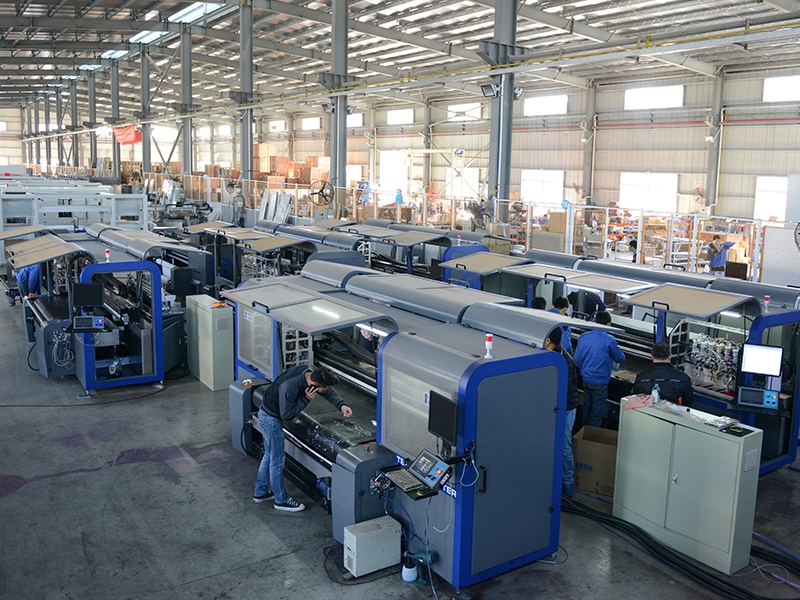
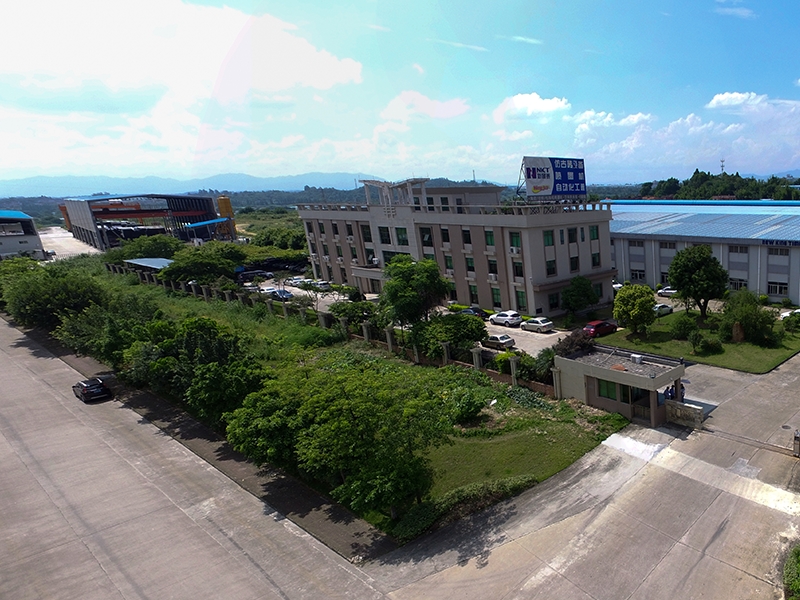
Foshan, Guangdong Province, represents the world's dense concentration of ceramic production and machinery engineering ecosystems. Sourcing high-speed digital printing equipment directly from established industrial hubs like Foshan delivers unmatched systemic advantages:
Over 90% of structural frames, CNC-machined components, UV curing lamps, and pneumatic feed modules are manufactured within a 50-kilometer radius. This localized supply chain reduces lead times for custom machine builds to under 30 days.
Equipped with state-of-the-art testing floors, factories like Magly conduct 72-hour continuous stress testing, laser interferometer calibration, and thermal burn-ins for every machine before international packing and dispatch.
By combining high-efficiency manufacturing workflows with world-class component integration, Chinese manufacturers deliver industrial-grade machinery at 30% to 50% lower initial capital expenditure compared to European counterparts, without sacrificing print longevity.
High-speed digital printing equipment has transcended traditional graphic signage applications. Today, specialized systems are customized for distinct, heavy-duty industrial vertical markets worldwide:
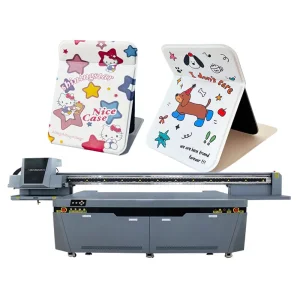
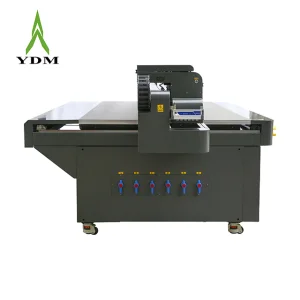
Utilizing heavy-duty flatbed UV printers and specialized inorganic ceramic digital inks, manufacturers reproduce authentic marble grain, granite, and 3D tactile textures on large-format ceramic slabs and building facade glass. Inks undergo high-temperature firing (over 700°C) or high-adhesion UV curing, ensuring weather resistance, UV stability, and scratch tolerance for exterior cladding.
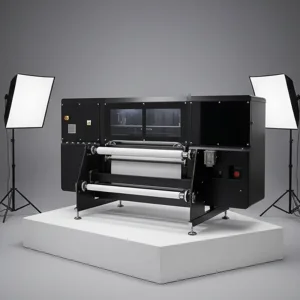
High-speed roll-to-roll and single-pass printers allow immediate printing on specialty peptide-based white paper, wood-grain decorative paper, corrugated fluting, and rigid folding cartons. Furniture manufacturers use wood-grain digital printers to replicate realistic timber textures onto MDF board overlays, eliminating real timber veneers.
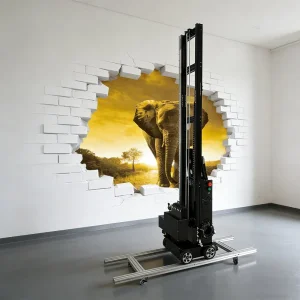
Mobile, track-guided UV digital wall printers allow contractors to decorate concrete, brick, plaster, ceramic tile, and glass surfaces directly on site. Featuring UV-curable waterproof inks, these systems print multi-layer 3D embossed artwork directly onto commercial walls, hospitality interiors, and outdoor urban murals with zero drying time.
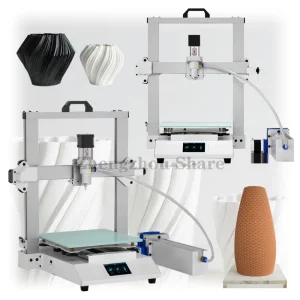
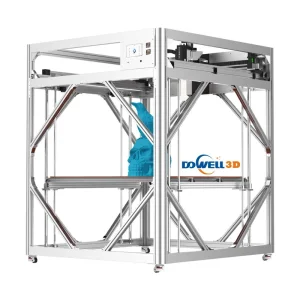
Expanding beyond 2D graphics, digital extrusion technologies (such as large-format 3D pellet extruders) allow manufacturers to deposit thermoplastic pellets for heavy structural prototyping, industrial molds, and architectural mockups up to 1000mm volumes rapidly and cost-effectively.
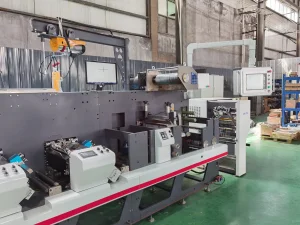
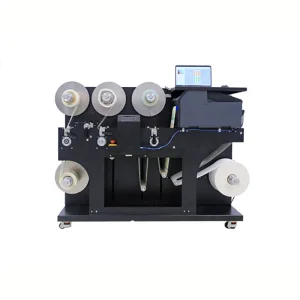
Integrated digital label systems combining rotary screen printing, ceramic anilox rollers, and UV digital ink stations allow narrow-web converters to apply high-density opaque white, variable data barcodes, metallic foil effects, and full-color graphics in a single continuous pass.
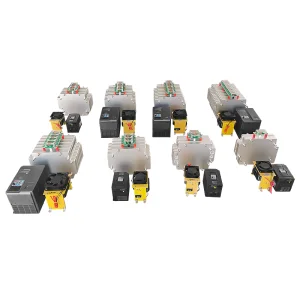
High-speed digital printing factories require integrated environmental safety solutions. High-output ozone generating machines (up to 700g/H) degrade residual dye monomers, remove colorants, and oxidize printing/dyeing wastewater before city sewer discharge.
Deploying heavy industrial machinery globally requires adherence to international electrical, mechanical, and environmental standards. Leading Chinese factories maintain strict manufacturing workflows to guarantee seamless installation, continuous operation, and operator safety across Europe, the Middle East, the Americas, and Southeast Asia.
Equipment is engineered with certified industrial wiring, emergency stop safety loops, high-flex cable chains, and fully shielded electronics to meet European Machinery Directive (2006/42/EC) and Low Voltage Directive requirements without electromagnetic interference (EMI).
Printers come standard with integrated IoT telemetry modules. Factory technicians provide real-time software diagnostics, RIP calibration tuning, and firmware updates remotely. Global deployment is backed by certified local engineering partners for installation and maintenance.
UV-curable and aqueous inks distributed alongside equipment comply with strict REACH chemical regulations and RoHS restriction guidelines, ensuring zero toxic volatile organic compound (VOC) emissions during production runs.
In a multi-pass printer, the printhead carriage travels back and forth horizontally across a stationary or slowly indexing substrate to build the image layer by layer. In contrast, a single-pass digital printer features a stationary printbar array spanning the entire width of the substrate; the material moves beneath the printheads continuously at high speed in a single sweep. Single-pass systems yield significantly higher throughput (up to 150+ linear m/min) but require higher initial capital investment.
Adhesion on dense, non-porous media is achieved through three integrated strategies: (1) Automated corona or flame surface pretreatment to increase surface energy, (2) Inline digital varnish or adhesion promoter primers jetted precisely prior to color application, and (3) Tailored UV-LED curing spectrum wavelengths (395nm or 365nm) that trigger rapid photoinitiator cross-linking for chemical bonding with the substrate.
Under proper maintenance, continuous filtration, and climate-controlled operating conditions, industrial piezoelectric printheads (e.g., Ricoh GEN5/GEN6, Kyocera KJ4 Series, Konica Minolta 1024i) typically achieve an operational lifespan of 2 to 5 years (equivalent to tens of billions of drop actuations per nozzle).
Foshan hosts the world's largest concentration of ceramic tile production lines, glazes suppliers, and heavy industrial equipment makers. This localized ecosystem gives equipment manufacturers like Foshan Magly Printer Co., Ltd. real-world industrial testing grounds, rapid access to precision component machine shops, and deep domain expertise in high-temperature pigment ink technology.
Printers are paired with industrial Raster Image Processor (RIP) software platforms (such as Onyx, Caldera, or ColorGATE). Factory technicians build specialized ICC color profiles for each substrate-ink combination using spectrophotometers, ensuring color matching across different batches, media densities, and surface textures.
Review technical specifications and request factory direct quotations for specialized paper, wood-grain, large-format UV flatbed, and 3D additive extrusion equipment.
 Magly Printer