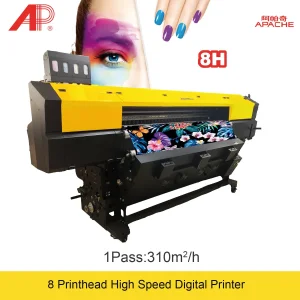
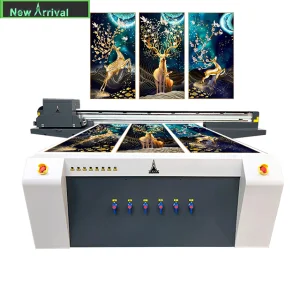
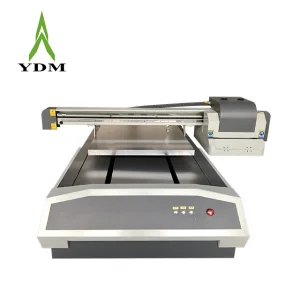
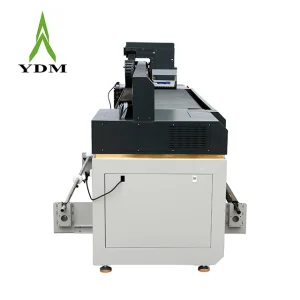
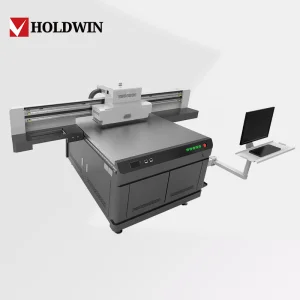
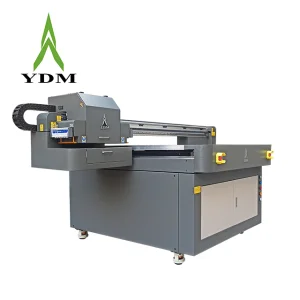
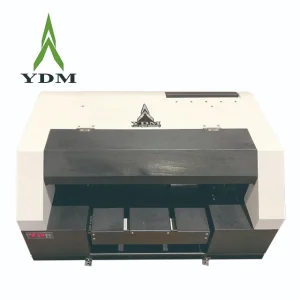
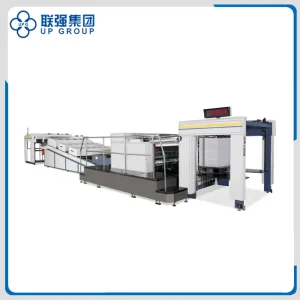
Explore our premium segment of digital printing machinery engineered for heavy-duty production cycles and high-fidelity output.

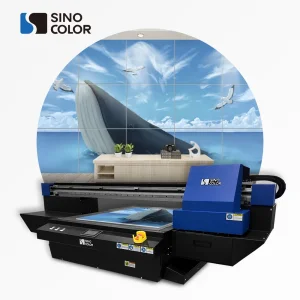
The global specialty printing equipment sector represents a critical, high-technology segment of the broader industrial manufacturing ecosystem. Distinct from conventional document printing, specialty printing focuses on direct-to-shape decorating, functional surface coating, and high-fidelity imaging on non-standard, rigid, or flexible substrates. These materials range from architectural float glass, industrial technical ceramics, and technical polymers, to electronic membranes, metal components, and heavy-duty industrial containers. As global consumer demand pivots toward mass-customization and local, just-in-time delivery models, traditional analog printing methods like rotary screen printing and pad transfer systems are increasingly integrated with—or fully replaced by—high-precision digital inkjet platforms.
According to recent macroeconomic market forecasts, the industrial digital decoration market is experiencing compound annual growth rates (CAGR) exceeding 8.5%. This growth is heavily supported by advancements in piezo-electric printhead engineering (exemplified by high-performance systems from Ricoh and Epson) and next-generation ultraviolet (UV) curing technologies. The integration of LED-UV light arrays and advanced ink formulations (such as low-migration, high-adhesion monomers) has enabled direct deposition on chemically inert surfaces, eliminating complex and environmentally taxing pre-treatment phases. As a result, manufacturing enterprises are achieving unprecedented reduction cycles in setup times, structural waste, and energy consumption.
The global supply chain for specialty printing machinery is characterized by dense regional specialization. In Western Europe, manufacturers typically concentrate on high-end, customized rotary screen systems and specialized ink-cup pad printing machinery. In contrast, East Asian manufacturing clusters—most notably centered in Foshan, China—have leveraged robust electronics and materials-science ecosystems to emerge as undisputed leaders in industrial digital inkjet integration. These regional clusters combine advanced precision assembly, high-throughput manufacturing, and optimized global distribution networks to deliver highly reliable industrial machinery at exceptional scales.
For global buyers evaluating the "Top 10" manufacturers and exporters, key indicators of engineering competency go far beyond physical footprint. High-performing organizations must demonstrate substantial research and development depth, rigorous adherence to international safety standardizations (such as CE directives and RoHS compliance), and comprehensive life-cycle technical support frameworks. The alignment of these attributes defines the tier-one status necessary to supply modern, automated production lines.
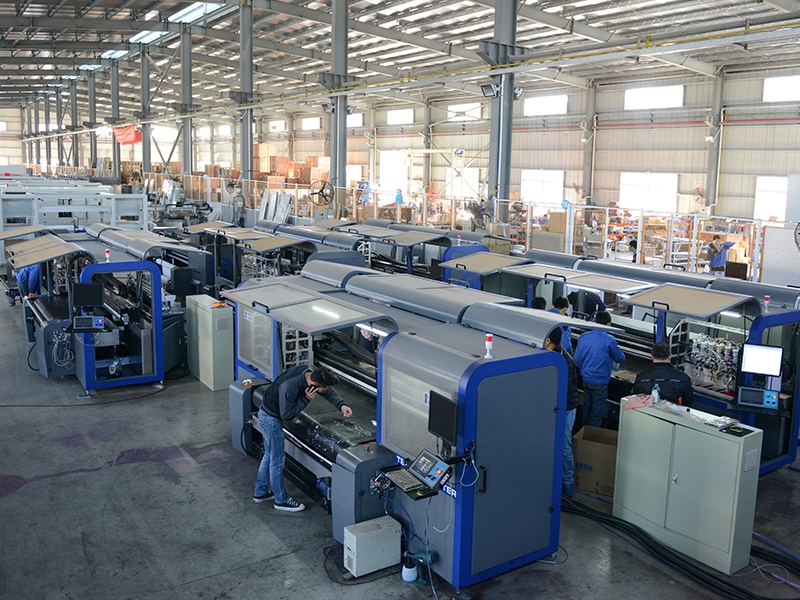
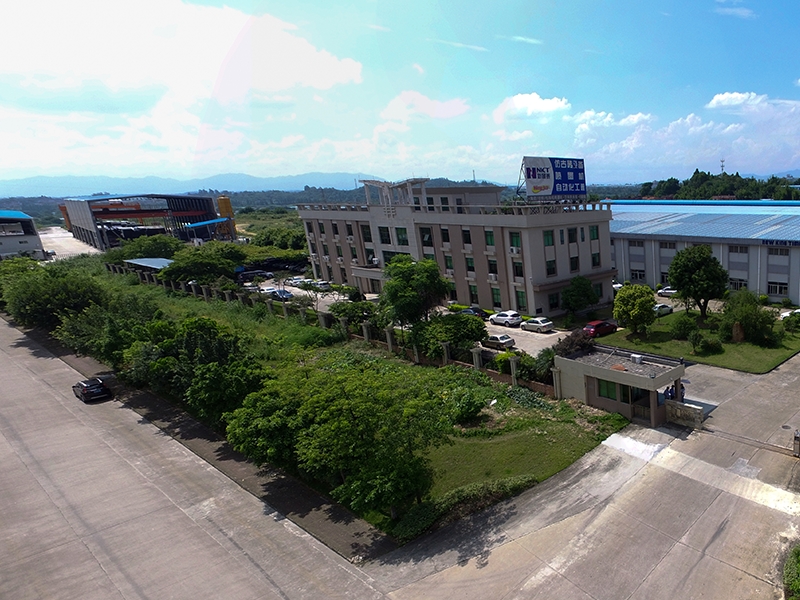
Foshan Magly Printer Co., Ltd. stands as a benchmark of innovation within this competitive matrix. As a professional Industrial Digital Printing Machine Manufacturer, the enterprise is dedicated to delivering advanced ceramic and glass inkjet printing solutions and integrated surface decoration systems. Operating out of a state-of-the-art production facility covering over 7,000 square meters in Foshan—a world-renowned hub for industrial ceramic processing and heavy machinery—the company utilizes local manufacturing supply chains to execute precise component sourcing, rigorous quality assurance audits, and accelerated research-to-market development cycles.
With a highly specialized technical team comprising more than 100 professionals, including senior R&D mechanical engineers, software engineers, and application field technicians, Magly focuses on high-precision digital printing machines. Their machinery is designed to optimize color performance, run reliably under continuous triple-shift operations, and maintain chemical compatibility across diverse substrates such as architectural glass, interior ceramic panels, and complex composite materials.
The core mechanical architecture of modern specialty digital printing equipment relies heavily on the integration of advanced printhead technologies. Systems utilizing the Ricoh Gen5 and Epson i3200 printheads represent the state-of-the-art in variable drop-on-demand (DoD) piezo technology. These printheads utilize specialized piezo-actuators that deform upon electrical stimulation, accurately ejecting micro-droplets ranging from 2.5 to 21 picoliters. By varying droplet sizes in real-time, the printers achieve high edge definition, smooth gradient transitions, and photo-realistic imaging while maintaining optimal ink coverage.
Furthermore, maintaining high-precision registration across large formats requires robust structural design. Magly's hybrid and flatbed platforms feature heavy-duty dual-gantry structures, high-precision magnetic linear motor drives, and integrated negative-pressure ink delivery systems. The negative-pressure calibration ensures that ink meniscus levels remain perfectly stable during high-speed printing carriage travel, preventing nozzle dropouts or color drift during continuous industrial operations.
Precise waveform tuning per ink batch guarantees optimal dot placement, minimizing satellite drops on non-porous glass and ceramic materials.
Integrated LED-UV arrays reduce energy consumption by up to 60% compared to traditional mercury arc lamps, while producing zero ozone emissions.
In-line corona treatment options alter substrate dyne levels on-the-fly, ensuring excellent adhesion profiles for complex engineering plastics.
Industrial production relies heavily on equipment uptime. Within Magly’s 7,000-square-meter facility, every machine undergoes comprehensive mechanical calibrations, stress testing, and color profile characterization before shipment. Advanced software algorithms control ink flow, curing intensity, and material transport speed, integrating printing systems into automated production lines.
By combining high-resolution digital imaging with automated material handling, Magly’s systems allow glass, ceramic, and panel fabricators to transition from analog screen setup configurations to agile digital operations. This pivot minimizes inventory requirements and allows for cost-effective print runs down to single unit custom pieces.
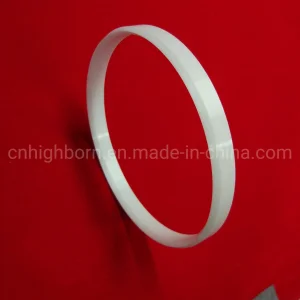
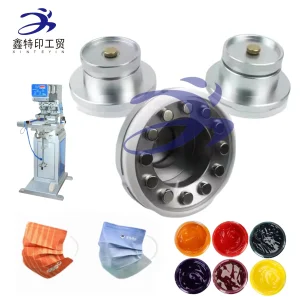
Note on Component Engineering: Industrial components like Zirconia Zro2 ink cups and ceramic rings provide superior wear resistance compared to standard metals. These engineered ceramics maintain a razor-sharp scraping edge over millions of print cycles, significantly reducing ink leakage and maintenance downtime in automated pad printing operations.
Modern manufacturers face the challenge of implementing decoration systems that integrate into existing manufacturing execution systems (MES). Specialty printing setups must handle diverse materials and variable geometries while maintaining high color consistency. Key industrial sectors utilize the following processing routes:
As we look toward 2030, the specialty printing industry is moving toward greater automation and closed-loop feedback control. Integrating optical inspection systems with real-time AI processing allows for on-the-fly nozzle drop-out detection and correction, reducing print defects to near-zero.
Simultaneously, materials science is driving the development of bio-based UV monomers and easily recyclable print coatings. Manufacturers who adopt these eco-friendly materials alongside energy-efficient LED curing systems will be well-positioned to meet tightening global carbon footprint regulations.
Expert insights addressing key performance parameters, machinery selection, and maintenance protocols.
Ricoh Gen5 printheads utilize highly durable stainless steel construction, making them exceptionally resistant to aggressive industrial inks and physical abrasion. With 1280 nozzles arranged in 4 lines, these heads support multi-drop greyscale imaging (starting at 7 picoliters) and operating frequencies up to 30 kHz. This ensures high-resolution printing, long service life, and stable operation in demanding industrial environments.
Zirconia (ZrO2) ceramic rings offer superior hardness, fracture toughness, and wear resistance compared to steel rings. They are highly chemically inert, resisting degradation from aggressive ink solvents. The self-lubricating properties of Zirconia minimize friction against steel cliché plates, providing clean Doctor blade scrapes, reducing ink leakage, and significantly extending the lifespan of the printing assembly.
UV-LED curing systems emit light within a narrow, specific ultraviolet band (typically 365nm or 395nm), generating minimal infrared heat. This prevents thermal distortion on heat-sensitive substrates like thin plastics. Additionally, LEDs require no warm-up time, operate with up to 60% lower power consumption, contain no toxic mercury, and have an operating lifetime exceeding 20,000 hours, compared to around 1,000 hours for mercury lamps.
Glass is non-porous and hydrophillic, which can make ink adhesion challenging. Proper preparation requires thorough cleaning (often with isopropyl alcohol) followed by the application of a silane coupling agent (primer). Flame or corona pre-treatment can also be used to raise the surface energy (measured in dyne/cm), ensuring strong, moisture-resistant ink adhesion.
Ink consumption depends on the print resolution (DPI), image coverage density, layer thickness (especially when printing white or textured varnish bases), and printhead droplet volume. On average, a standard digital print at 720x720 DPI with 100% coverage consumes approximately 10 to 12 milliliters of ink per square meter.
Browse our advanced accessories, consumables, and automated systems for high-output manufacturing lines.
 Magly Printer