
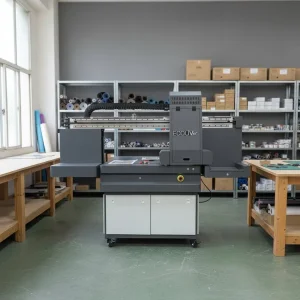

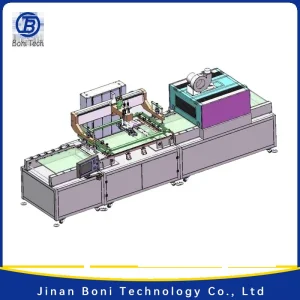
Operating from the global manufacturing epicenter of Foshan, Guangdong, Foshan Magly Printer Co., Ltd. stands as a premier Industrial Digital Printing Machine Manufacturer. With a state-of-the-art facility spanning over 7,000 square meters and housing more than 100 highly specialized technicians, design engineers, and service professionals, Magly has pioneered the integration of advanced inkjet engineering with automated mechanical substrates.
Our core mission revolves around solving complex material decoration problems. Through our proprietary research, we deliver heavy-duty machinery built to coat, cure, and print on composite wood materials, MDF, plywood, structural bamboo, architectural ceramics, and high-performance glass. By utilizing drop-on-demand (DOD) micro-piezoelectric technologies, we enable localized and global industrial enterprises to minimize manufacturing waste, transition to eco-friendly production, and execute customized mass orders with microscopic detail.
Analyzing the strategic transition from traditional mechanical veneer pressings to high-yield industrial digital direct-to-substrate decoration.
Global demand for personalized architectural panels and eco-labeled solid wood furniture has forced producers to transition away from high-VOC traditional lacquers. Contemporary digital wood printing methods have introduced clean, instantaneous UV-curing processes that emit zero volatile organic compounds, aligning manufacturers with strict international environmental protocols.
The modern architectural market demands not just color, but tactile reality. Direct-to-substrate wood printing now incorporates 3D texture mapping, synchronizing physical wood grains with digital print passes. Digital varnish layers mimic the realistic feel of natural ash, oak, and walnut, elevating basic MDF panels into luxury interior components.
Short production runs and dynamic customization are financially unviable under conventional gravure printing processes. Digital wood printing eliminates design setup costs, screen exposures, and material run-in times. This paradigm shift enables manufacturers to sustain profitable margins on custom hotel fit-outs, boutique cabinetry, and fast-fashion furniture lines.
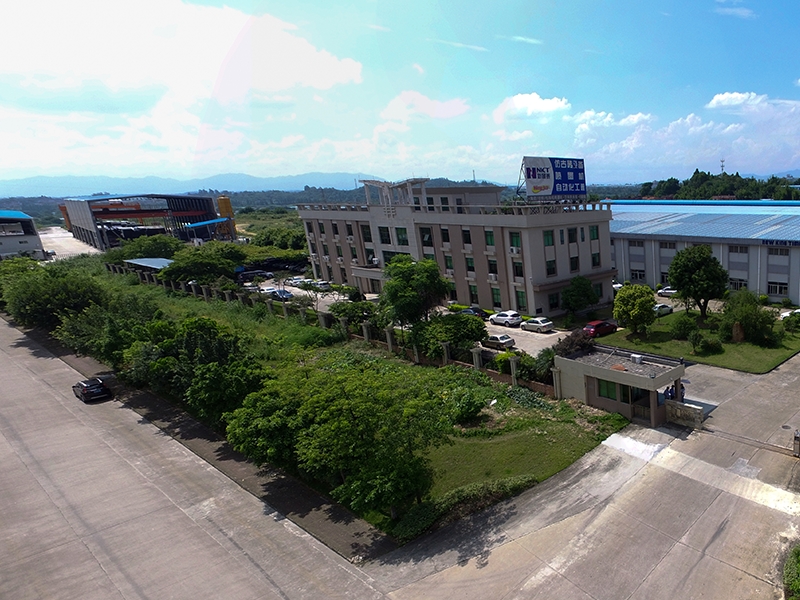
A visual breakdown of our operations, logistics, and technological capabilities in southern China.
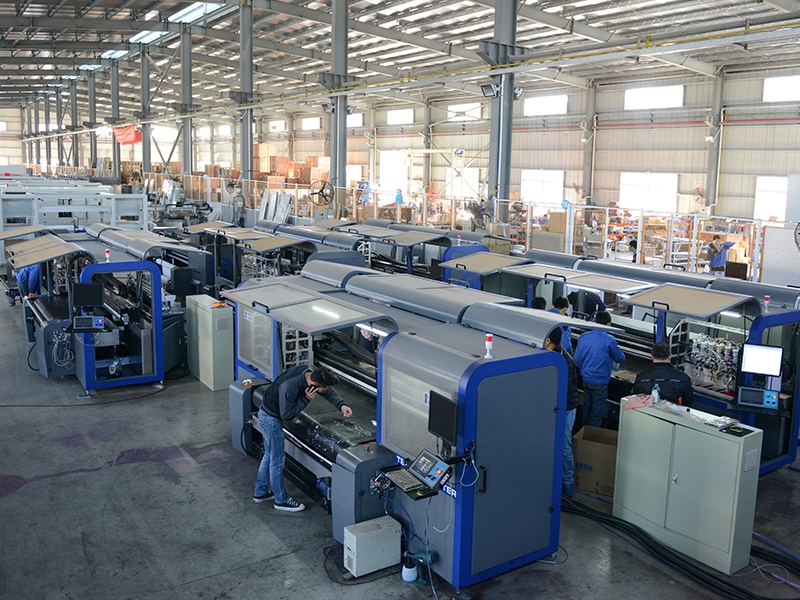
Unlike simple trading outfits, Magly oversees the entire lifecycle of industrial machine assembly. In our facility, we conduct precision steel frame milling, stress relief annealing of structural beams, and complex printhead alignment calibrations under cleanroom conditions.
Our R&D department collaborates closely with ink chemists and control board software programmers. This creates a unified feedback loop, resulting in optimal drop placement accuracy, reduced ink misting, and maximum lifespan for expensive components like piezo printheads. We source premium materials, integrate Japanese and European components, and perform 72-hour continuous stress testing on every unit before shipment.
A comprehensive review of the physical mechanisms, ink adhesion profiles, and appropriate applications for various techniques.
| Technique Type | Adhesion Mechanism | Resolution Limits | Suitable Wood Materials | Industrial Application Area |
|---|---|---|---|---|
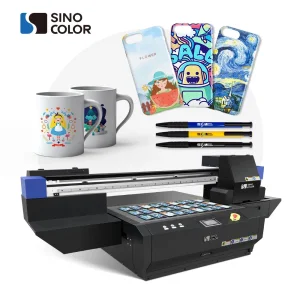
| Direct-to-Substrate UV Flatbed | LED UV Curing (Chemical cross-linking of ink monomers with wood fibers) | Up to 1200 x 1200 dpi (Variable droplet sizes from 3.5pl to 12pl) | MDF, Ply, Solid Oak, Pine, Reclaimed wood, Particle Board | Heavy-duty cabinetry panels, commercial doors, office partitions, wall paneling. |
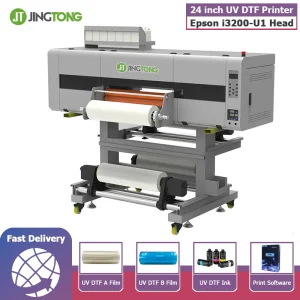
| UV DTF (Direct-to-Film) Transfer | Pressure-sensitive adhesive transfer layer from base carrier film | Up to 1440 dpi (Ultra-fine micro-text and complicated logos) | Irregular objects, round items, highly curved solid wood, turned legs | Craft boxes, high-end toy fabrication, branded corporate gifts, irregular moldings. |
| Dye Sublimation & Heat Press | Thermal gasification of inks into specialized polyester surface pre-coat | Standard high-res transfer paper limit (approx. 720 dpi) | MDF with dense polymer coating, pre-treated treated softwoods | High-gloss custom plaques, decorative domestic coasters, specialty signs. |
| Plasma Activated Pre-Treatment | High-voltage ionization modifying surface energy (dyne level enhancement) | N/A (Pre-treatment phase) | Oily woods (Teak, Ipe), highly resinous softwood veneers, laminates | Exterior architectural siding, marine grade wood elements, deck boards. |
How Magly's systems resolve structural density variations, moisture content, and wood-surface chemistry imbalances.
Natural wood is hygroscopic, containing variable pockets of water vapor. Under the intense heat of LED-UV curing lamps, this moisture can rapidly expand, causing microscopic ink blistering or "outgassing". Magly integrates state-of-the-art curing energy controllers, letting operators tune UV lamp intensity to prevent thermal shock, keeping the moisture trapped safely below the cured surface.
Certain wood species, like teak, cedar, and pine, secrete natural resins and oils that repel liquid inks. Directly printing on untreated specimens leads to poor cross-cut adhesion values. Magly implements automated inline primer spray stations, depositing a barrier layer that neutralizes wood sap while creating active molecular anchoring sites for the UV ink layer.
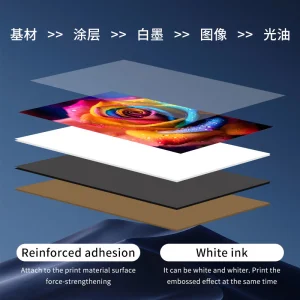
Standard industrial printing often hides the unique beauty of wood grain under flat layers of ink. Our advanced UV printers feature CMYK + White + Gloss varnish channels. This allows operators to print localized, highly tactile embossed textures. The printhead deposits high-build white ink specifically over the natural grain, creating realistic 3D textures that mimic the natural feel of real wood.
The engineering core that powers Magly's high-speed industrial digital printers.
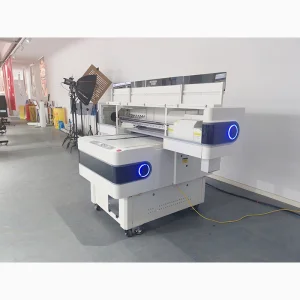
Magly's high-precision UV printers, such as the 6090UV and 2.5X1.3m Industrial Flatbed, are engineered around solid industrial welded chassis frames. The structural framework is treated with high-temperature tempering to relieve internal stresses, ensuring the print gantry stays perfectly aligned within microns, even over years of continuous high-speed movement.
Dual-Beam Lead Screw Integration: We utilize dual Japanese THK linear guide rails and high-precision magnetic encoder strips. This guarantees jitter-free gantry motion, which is crucial when printing heavy wood blocks at high speed.
Variable Droplet Piezo Technology: Equipped with industrial Epson I3200 or Ricoh printheads, our systems dynamically adjust droplet sizes (from 3.5pl for crisp text to 12pl for dense color fills). This system drastically reduces ink consumption while maintaining smooth, photorealistic color gradients.
Segmented Vacuum Bed Control: The integrated suction table is split into adjustable zones, securing warped plywood and MDF panels flat against the bed. This prevents head strikes and maintains a consistent print distance across the entire panel.
Advanced UV-LED Curing Systems: We integrate dual water-cooled UV-LED curing lamps. Operating at 395nm wavelength, these lamps cure ink instantly without overheating delicate wood substrates.
Negative Pressure System: This system ensures a steady ink flow to the printheads during high-speed runs, preventing drop-outs and extending printhead life.
RIP Software Integration: Support for industry-standard software like Onyx, Caldera, and Photoprint ensures accurate ICC color management. This guarantees that your final prints match the digital designs perfectly.
White Ink Circulation: Our printers feature a continuous white ink agitation and circulation system, keeping pigments suspended to prevent settling and printhead clogging.
Ensuring your manufacturing operation meets environmental, industrial, and safety standards globally.
All Magly industrial digital printing machines and UV inks comply with CE and RoHS requirements. Our UV inks are certified for low chemical emissions, meeting strict indoor air quality standards like the GREENGUARD Gold protocols. This allows our clients to safely export finished, printed wood furniture to North America and the European Union.
We manage a secure, reliable supply chain for critical parts, inks, and spare components. With warehouses positioned in Europe, North America, and Southeast Asia, we ensure fast delivery of parts and printheads. This keeps your production lines running smoothly with minimal downtime.
Our dedicated technical support team offers remote diagnostic assistance, video setup walkthroughs, and on-site training. We help your operators master color calibration, machine maintenance, and optimization, ensuring you get the most out of your Magly investment.
Providing detailed answers to the most common technical questions about industrial wood printing.

 Magly Printer